API
General
- class aiopenapi3.OpenAPI(url, document, session_factory=<class 'httpx.AsyncClient'>, loader=None, plugins=None, use_operation_tags=True)
- property _: OperationIndex
the sad smiley interface access operations by operationId
- authenticate(*args, **kwargs)
authenticate, multiple authentication schemes can be used simultaneously serving “or” or “and” authentication schemes
- Parameters:
args – None to remove all credentials / reset the authorizations
kwargs – scheme=value
- static cache_load(path, plugins=None, session_factory=None)
read a pickle api object from path and init the schema types
- Parameters:
path (
Path) – cache path- Return type:
- cache_store(path)
write the pickled api object to Path to dismiss potentially local defined objects loader, plugins and the session_factory are dropped
- Parameters:
path (
Path) – cache path- Return type:
None
- clone(baseurl=None)
shallwo copy the api object optional set a base url
- Parameters:
baseurl (
Optional[URL])- Return type:
- createRequest(operationId)
create a Request
lookup the Operation by operationId or path,method
the type of Request returned depends on the session_factory of the OpenAPI object and OpenAPI/Swagger version
- Parameters:
operationId (
str|tuple[str, HTTPMethodType]) – the operationId or tuple(path,method)- Return type:
- Returns:
the returned Request is either
aiopenapi3.request.RequestBaseor - in case of a httpx.AsyncClient session_factory -aiopenapi3.request.AsyncRequestBase
- async classmethod load_async(url, session_factory=<class 'httpx.AsyncClient'>, loader=None, plugins=None, use_operation_tags=False)
Create an asynchronous OpenAPI object from a description document.
- Parameters:
url (
str) – the url of the description documentsession_factory (
Callable[...,AsyncClient]) – used to create the session for http/s ioloader (
Optional[Loader]) – the backend to access referenced description documentsplugins (
Optional[list[Plugin]]) – potions to cure defects in the description document or requests/responsesuse_operation_tags (
bool) – honor tags
- Return type:
- classmethod load_file(url, path, session_factory=<class 'httpx.AsyncClient'>, loader=None, plugins=None, use_operation_tags=False)
Create an OpenAPI object from a description document file.
from pathlib import Path
import aiopenapi3
import httpx

loader = aiopenapi3.FileSystemLoader(pathlib.Path("<root>"))
api = aiopenapi3.OpenAPI.load_file(
    url="<live-url>",
    path=pathlib.Path("<path-relative-to-root>"),
    loader=loader,
    session_factory=httpx.Client
    )
- Parameters:
url (
str) – the fictive url of the description documentpath (
str|Path|URL) – description document locationsession_factory (
Callable[...,AsyncClient|Client]) – used to create the session for http/s io, defaults to use an AsyncClientloader (
Optional[Loader]) – the backend to access referenced description documentsplugins (
Optional[list[Plugin]]) – potions to cure defects in the description document or requests/responsesuse_operation_tags (
bool) – honor tags
- Return type:
- classmethod load_sync(url, session_factory=<class 'httpx.Client'>, loader=None, plugins=None, use_operation_tags=False)
Create a synchronous OpenAPI object from a description document.
- Parameters:
url – the url of the description document
session_factory (
Callable[...,Client]) – used to create the session for http/s ioloader (
Optional[Loader]) – the backend to access referenced description documentsplugins (
Optional[list[Plugin]]) – potions to cure defects in the description document or requests/responsesuse_operation_tags (
bool) – honor tags
- Return type:
- classmethod loads(url, data, session_factory=<class 'httpx.AsyncClient'>, loader=None, plugins=None, use_operation_tags=False)
- Parameters:
url (
str) – the url of the description documentdata (
str) – description documentsession_factory (
Callable[...,AsyncClient|Client]) – used to create the session for http/s io, defaults to use an AsyncClientloader (
Optional[Loader]) – the backend to access referenced description documentsplugins (
Optional[list[Plugin]]) – potions to cure defects in the description document or requests/responsesuse_operation_tags (
bool) – honor tags
- Return type:
-
raise_on_http_status:
list[tuple[type[Exception],tuple[int,int]]] Raise for http status code
Requests
Requests encapsulate the required information to call an operation. They
compile the actual HTTP request to be sent, including authentication information, path, headers, parameters and the body.
send it
receive the result
process it
and return the model of the data
- class aiopenapi3.request.RequestBase(api, method, path, operation, servers)
- __call__(*args, return_headers=False, context=None, **kwargs)
- Parameters:
args
return_headers (
bool) – if set return a tuple (header, body)kwargs
- Return type:
Union[dict[str, JSON],list[JSON],str,int,float,bool,None,tuple[ResponseHeadersType, JSON]]- Returns:
body or (header, body)
- abstract property data: Schema | Schema | Schema | None
- Returns:
the Schema for the body
-
operation:
Union[Operation,Operation,Operation] associated OpenAPI Operation
- abstract property parameters: list[ParameterType]
- Returns:
list of
aiopenapi3.base.ParameterBasewhich can be used to inspect the required/optional parameters of the requested Operation
- request(data=None, parameters=None, context=None)
Sends an HTTP request as described by this Path
- Parameters:
data (any, should match content/type) – The request body to send.
parameters (dict{str: str}) – The path/header/query/cookie parameters required for the operation
context (Any) – The request context for use in aiopenapi3.plugin.Message
- Return type:
Response- Returns:
headers, data, response
- root
API document root
- stream(data=None, parameters=None, context=None)
- Sends an HTTP request as described by this Path - but do not process the result
returns a tuple of Schema, httpx.Client, httpx.Response
requires closing the Client when done processing the response
requires manual processing of the data
intended for use with of large results
httpx response streaming via Response.iter_bytes()
combine with ijson coroutines
- Parameters:
data (any, should match content/type) – The request body to send.
parameters (dict{str: str}) – The path/header/query/cookie parameters required for the operation
- Return type:
StreamResponse- Returns:
schema, session, response
- class aiopenapi3.request.AsyncRequestBase(api, method, path, operation, servers)
- async __call__(*args, return_headers=False, context=None, **kwargs)
- Parameters:
args
return_headers (
bool) – if set return a tuple (header, body)kwargs
- Return type:
Union[dict[str, JSON],list[JSON],str,int,float,bool,None,tuple[dict[str,str], JSON]]- Returns:
body or (header, body)
- abstract property data: Schema | Schema | Schema | None
- Returns:
the Schema for the body
-
operation:
Union[Operation,Operation,Operation] associated OpenAPI Operation
- abstract property parameters: list[ParameterType]
- Returns:
list of
aiopenapi3.base.ParameterBasewhich can be used to inspect the required/optional parameters of the requested Operation
- async request(data=None, parameters=None, context=None)
Sends an HTTP request as described by this Path
- Parameters:
data (any, should match content/type) – The request body to send.
parameters (dict{str: str}) – The path/header/query/cookie parameters required for the operation
context (Any) – The request context for use in aiopenapi3.plugin.Message
- Return type:
Response- Returns:
headers, data, response
- root
API document root
- async stream(data=None, parameters=None, context=None)
- Sends an HTTP request as described by this Path - but do not process the result
returns a tuple of Schema, httpx.Client, httpx.Response
requires closing the Client when done processing the response
requires manual processing of the data
intended for use with of large results
httpx response streaming via Response.iter_bytes()
combine with ijson coroutines
- Parameters:
data (any, should match content/type) – The request body to send.
parameters (dict{str: str}) – The path/header/query/cookie parameters required for the operation
- Return type:
StreamResponse- Returns:
schema, session, response
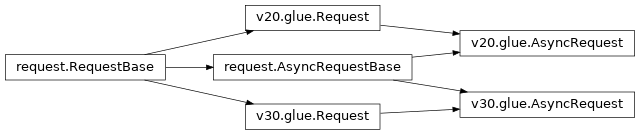
The different major versions of the OpenAPI protocol require their own Request/AsyncRequest.
- class aiopenapi3.v20.glue.Request(api, method, path, operation, servers)
- class aiopenapi3.v20.glue.AsyncRequest(api, method, path, operation, servers)
- class aiopenapi3.v30.glue.Request(api, method, path, operation, servers)
- class aiopenapi3.v30.glue.AsyncRequest(api, method, path, operation, servers)
OperationIndex
Parameters
Parameters are part of the operation specification and can be in
path e.g. /users/{name}
query e.g. /users?limit=50
header
cookie
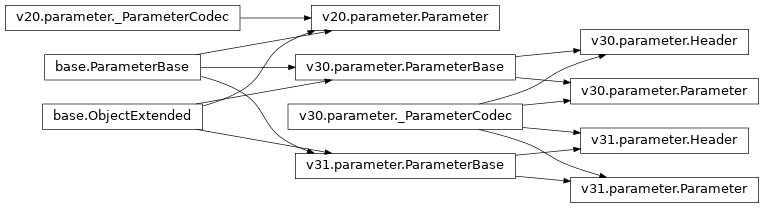
Used to compile a aiopenapi3.request.RequestBase, not meant to be dealt with besides debugging.
Parameter
- class aiopenapi3.base.ParameterBase
- class aiopenapi3.v20.parameter.Parameter(**data)
Describes a single operation parameter.
-
allowEmptyValue:
bool|None
-
collectionFormat:
str|None
-
default:
Any
-
description:
str|None
-
enum:
Optional[Any]
-
exclusiveMaximum:
bool|None
-
exclusiveMinimum:
bool|None
- extensions: Any | None
-
format:
str|None
-
in_:
_In
-
items:
Items|Empty|None
-
maxItems:
int|None
-
maxLength:
int|None
-
maximum:
int|None
-
minItems:
int|None
-
minLength:
int|None
-
minimum:
int|None
-
multipleOf:
int|None
-
name:
str
-
pattern:
str|None
-
required:
bool|None
-
schema_:
Schema|Reference|None
-
type:
str|None
-
uniqueItems:
bool|None
-
allowEmptyValue:
- class aiopenapi3.v30.parameter.Parameter(**data)
- allowEmptyValue: bool | None
- allowReserved: bool | None
- content: dict[str, 'MediaType']
- deprecated: bool | None
- description: str | None
- example: Any | None
- examples: dict[str, Union['Example', Reference]]
- explode: bool | None
- extensions: Any | None
-
in_:
_In
-
name:
str
- required: bool | None
- schema_: Schema | Reference | None
- style: str | None
- class aiopenapi3.v31.parameter.Parameter(**data)
- allowEmptyValue: bool | None
- allowReserved: bool | None
- content: dict[str, 'MediaType'] | None
- deprecated: bool | None
- description: str | None
- example: Any | None
- examples: dict[str, Union['Example', Reference]]
- explode: bool | None
- extensions: Any | None
-
in_:
_In
-
name:
str
- required: bool | None
- schema_: Schema | None
- style: str | None
Header
- class aiopenapi3.v30.parameter.Header(**data)
- allowEmptyValue: bool | None
- allowReserved: bool | None
- content: dict[str, 'MediaType']
- deprecated: bool | None
- description: str | None
- example: Any | None
- examples: dict[str, Union['Example', Reference]]
- explode: bool | None
- extensions: Any | None
- required: bool | None
- schema_: Schema | Reference | None
- style: str | None
- class aiopenapi3.v31.parameter.Header(**data)
- allowEmptyValue: bool | None
- allowReserved: bool | None
- content: dict[str, 'MediaType'] | None
- deprecated: bool | None
- description: str | None
- example: Any | None
- examples: dict[str, Union['Example', Reference]]
- explode: bool | None
- extensions: Any | None
- required: bool | None
- schema_: Schema | None
- style: str | None
Parameter Encoding
Each of those Parameters has a different encoding strategy for different argument types. e.g. encoding a List[str] as query parameter or object in a header. Additionally Swagger 2.0 has a different encoding strategy to OpenAPI 3.x.
- class aiopenapi3.v20.parameter._ParameterCodec
- _decode(value)
- _encode(name, value)
- class aiopenapi3.v30.parameter._ParameterCodec
- _decode(value)
- _encode(name, value)
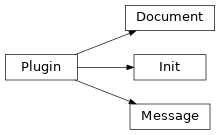
Plugin Interface
Init Plugins
Init plugins are used during initialization, they can be used to modify PathItems or Schemas before generating the OperationIndex/Models.
- class Init.Context(initialized=None, schemas=None, resolved=None, paths=None)
-
initialized:
Optional[OpenAPI] = None available in
initialized()
-
initialized:
Document Plugins
Document plugins are used to mangle description documents.
- class Document.Context(url, document)
Message Plugins
Message plugins are used to mangle message.
- class Message.Context(request, operationId, marshalled=None, sending=None, received=None, headers=None, cookies=None, status_code=None, content_type=None, parsed=None, expected_type=None, unmarshalled=None)
-
content_type:
str|None= None available
received()
-
headers:
Headers= None available
sending()received()
-
marshalled:
dict[str,Any] |None= None available
marshalled()
-
operationId:
str available
marshalled()sending()received()parsed()unmarshalled()
-
received:
bytes|None= None available
received()
-
status_code:
str|None= None available
received()
-
unmarshalled:
BaseModel|None= None available
unmarshalled()
-
content_type:
- class aiopenapi3.plugin.Message
sending: marshalled(dict)-> sending(str)
receiving: received -> parsed -> unmarshalled
Loader
The loader is used to access description documents.
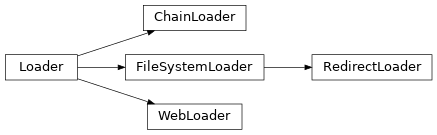
aiopenapi3.loader.Loader is the base class, providing flexibility to load description documents.
loading operation
The order of operation for the loader is:
Loaders
- class aiopenapi3.loader.Loader(yload=<class 'aiopenapi3.loader.YAML12Loader'>)
Loaders are used to ‘get’ description documents:
load
decode
parse
- classmethod decode(data, codec)
decode bytes to ascii or utf-8
- Parameters:
data (
bytes)codec (
str|None)
- Return type:
str- Returns:
- get(plugins, url)
load & parse the description document :type plugins:
Plugins:param plugins: collection of aiopenapi3.plugin.Document plugins :type url:URL:param url: location of the description document :return:
- abstract load(plugins, url, codec=None)
load and decode description document
- Parameters:
plugins (
Plugins) – collection of aiopenapi3.plugin.Document pluginsurl (
URL) – location of the description documentcodec (
Optional[str])
- Returns:
decoded data
- parse(plugins, url, data)
parse the downloaded document as json or yaml
- Parameters:
plugins (
Plugins) – collection of aiopenapi3.plugin.Document pluginsurl (
URL) – location of the description documentdata (
str) – decoded data of the description document
- Returns:
- class aiopenapi3.loader.FileSystemLoader(base, yload=<class 'aiopenapi3.loader.YAML12Loader'>)
Loader to use the local filesystem
- class aiopenapi3.loader.WebLoader(baseurl, session_factory=<class 'httpx.Client'>, yload=<class 'aiopenapi3.loader.YAML12Loader'>)
Loader downloads data via http/s using the supplied session_factory
- class aiopenapi3.loader.ChainLoader(*loaders, yload=<class 'aiopenapi3.loader.YAML12Loader'>)
Loader to chain different Loaders: succeed or raise trying
The ChainLoader is useful when using multiple locations with description documents. As an example, try to lookup the referenced description documents locally or from the web.
description_documents = Path("/data/description_documents")

loader = ChainLoader(
            RedirectLoader(description_documents / "dell"),
            WebLoader(yarl.URL("https://redfish.dmtf.org/schemas/v1/")),
            WebLoader(yarl.URL("http://redfish.dmtf.org/schemas/swordfish/v1/")),
)

api = OpenAPI.load_file(
    target, yarl.URL("openapi.yaml"), loader=loader
)
- class aiopenapi3.loader.RedirectLoader(base, yload=<class 'aiopenapi3.loader.YAML12Loader'>)
Loader to redirect web-requests to a local directory everything but the “name” is stripped of the url
The RedirectLoader allows redirecting to local resources. A description documents URI is stripped to the file name of the document, and loaded relative to the basedir of the RedirectLoader.
RedirectLoader("description_documents/dell")
Exceptions
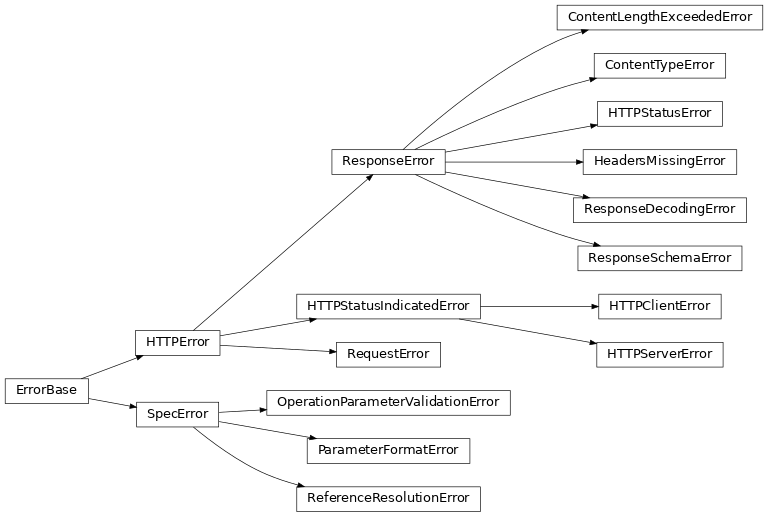
There is different types of Exceptions used depending on the subsystem/failure.
Description Document Validation
- class aiopenapi3.errors.SpecError(message, element=None)
This error class is used when an invalid format is found while parsing an object in the spec.
- class aiopenapi3.errors.ReferenceResolutionError(message, element=None)
This error class is used when resolving a reference fails, usually because of a malformed path in the reference.
- class aiopenapi3.errors.ParameterFormatError(message, element=None)
The specified parameter encoding is invalid for the parameter family
Message
- exception aiopenapi3.errors.HTTPError
HTTPError is the base class for all request/response related errors.
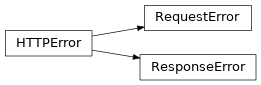
- exception aiopenapi3.errors.RequestError(operation, request, data, parameters)
-
data:
Union[dict[str, JSON],list[JSON],str,int,float,bool,None,BaseModel,Sequence[tuple[str,Union[IO[bytes],bytes,str,Tuple[Optional[str],Union[IO[bytes],bytes,str]],Tuple[Optional[str],Union[IO[bytes],bytes,str],Optional[str]],Tuple[Optional[str],Union[IO[bytes],bytes,str],Optional[str],Mapping[str,str]]]]]]
-
operation:
Union[Operation,Operation,Operation,None]
-
parameters:
Optional[dict[str,Union[str,BaseModel]]]
-
data:
A RequestError typically wraps an error of the underlying httpx library.
- exception aiopenapi3.errors.ResponseError
the response can not be processed accordingly
ResponseErrors indicate the response does not match the expectation/definition in the description document. Most ResponseErrors can be mitigated around using plugins to match the protocol to the description document.
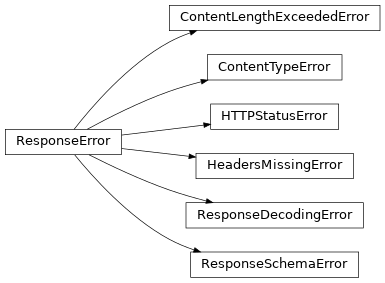
- exception aiopenapi3.errors.ContentTypeError(operation, content_type, message, response)
The content-type is unexpected
-
content_type:
str|None
-
message:
str
-
operation:
Union[Operation,Operation,Operation]
-
response:
Response
-
content_type:
- exception aiopenapi3.errors.ContentLengthExceededError(operation, content_length, message, response)
The Content-Length exceeds our Limits
-
content_length:
int
-
message:
str
-
operation:
Union[Operation,Operation,Operation]
-
response:
Response
-
content_length:
- exception aiopenapi3.errors.HTTPStatusError(operation, http_status, message, response)
The HTTP Status is unexpected
-
http_status:
int
-
message:
str
-
operation:
Union[Operation,Operation,Operation]
-
response:
Response
-
http_status:
- exception aiopenapi3.errors.ResponseDecodingError(operation, data, response)
the json decoder failed
-
data:
str
-
operation:
Union[Operation,Operation,Operation]
-
response:
Response
-
data:
- exception aiopenapi3.errors.ResponseSchemaError(operation, expectation, schema, response, exception)
the response data does not match the schema
-
exception:
Exception|None
-
expectation:
Union[Response,MediaType,MediaType]
-
operation:
Union[Operation,Operation,Operation]
-
response:
Response
-
schema:
Union[Schema,Schema,Schema,None]
-
exception:
HTTP Status
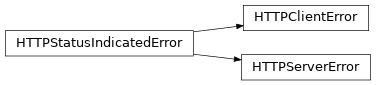
- exception aiopenapi3.errors.HTTPStatusIndicatedError(status_code, headers, data)
The HTTP Status is 4xx or 5xx
-
data:
BaseModel
-
headers:
dict[str,str]
-
status_code:
int
-
data:
- exception aiopenapi3.errors.HTTPClientError(status_code, headers, data)
response code 4xx
- exception aiopenapi3.errors.HTTPServerError(status_code, headers, data)
response code 5xx
Extra
Cull & Reduce
Reduce & Cull are Plugins limiting the models built to the minimum required to match the requirements of the supplied Operations Code below will eleminate all schemas not required to serve the operations identified by the pattern/string match and http methods associated.
- class aiopenapi3.extra.Reduce(*operations)
- __init__(*operations)
- Parameters:
operations (
list[Union[tuple[PathMatchType,list[HTTPMethodMatchType] |None],Pattern,str]]) – the operation selector
- class aiopenapi3.extra.Cull(*operations)
The Cull plugin removes everything not required as early as possible
api = OpenAPI.load_sync(
    "http://127.0.0.1/api.yaml",
    plugins=[
        Cull(
            "getPetById",
            re.compile(r".*Pet.*"),
            ("/logout", ["get"]),
            (re.compile(r"^/user.*"), ["post"]),
        )
    ],
)

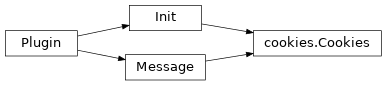
Cookies
This plugin deals with cookies from responses and adds in requests based on a policy.
- class aiopenapi3.extra.Cookies(cookiejar=None, policy='jar')
- __init__(cookiejar=None, policy='jar')
- Parameters:
cookiejar (
Optional[CookieJar]) – a cookiejar.CookieJar instancepolicy (
Literal['jar','securitySchemes']) –There are two policies:
securitySchemes - only cookies whose name is in the securitySchemes are used. To match authentication requirements credentials are set via OpenAPI.authenticate(name=value)
jar - all cookies are used, basically like a browser would do. Cookies not mentioned in securitySchemes are set besides OpenAPI.authenticate() to allow using them without adjusting the description document.
api = OpenAPI.load_sync(
    "http://127.0.0.1/api.yaml",
    plugins=[
        Cookies(policy="jar")
    ],
)